Each month, the CleanData team will publish an update to the Electricity Price Hub (EPH), our partnership with Heatmap News and MIT. The platform tracks monthly residential electricity rates and bills at the utility level across all 50 states. These updates share what the data shows: where prices are moving, which utilities are driving changes, and what is behind the numbers. This is our April 2026 update.
Across the full dataset, the current 12-month trailing average electricity price and bill are at record highs, up 6.5% and 6.0% from one year ago, respectively.
| April 2026 | Change from April 2025 | Change from April 2021 | |
| National Average Price (12-mo trailing ave) | 18.72 cents/kWh | +1.15 cents/kWh (+6.5%) | +5.05 cents/kWh (+36.9%) |
| National Average Price | 18.80 cents/kWh | +1.17 cents/kWh (+6.7%) | +4.99 cents/kWh (+36.2%) |
| National Average Bill (12-mo trailing ave) | $166/mo | +$9/mo (+6.0%) | +$42/mo (+33.8%) |
| National Average Bill | $136/mo | +$14/mo (+11.8%) | +$43/mo (+46.0%) |
| National Average Usage | 703 kWh | +35 kWh (+5.2%) | +43 kWh (+6.5%) |
Bill and price data is nominal and national averages are weighted by electricity sales
Growth in rates and bills in 2026 to date is moderate, tracking closely to previous years.
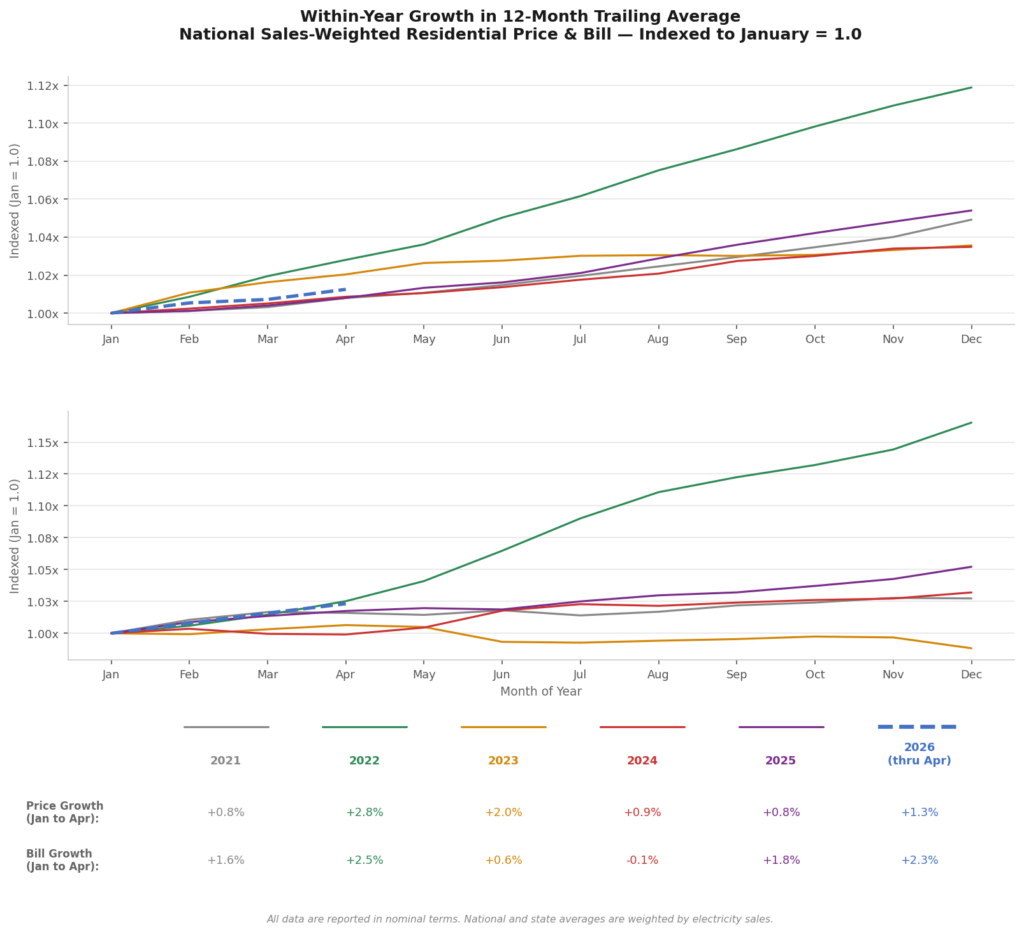
While nationwide growth in rates has moderated, certain states and utilities have seen marked increases over the last year and in 2026 to date.
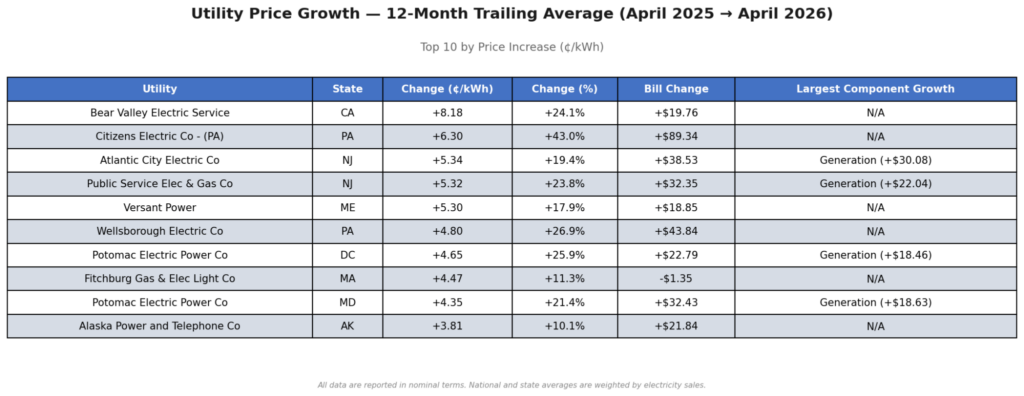
Washington DC has seen the largest 1-year increase in residential electricity rates, measured as a change in 12-month trailing average, driven by the rising cost of Pepco’s generation service.
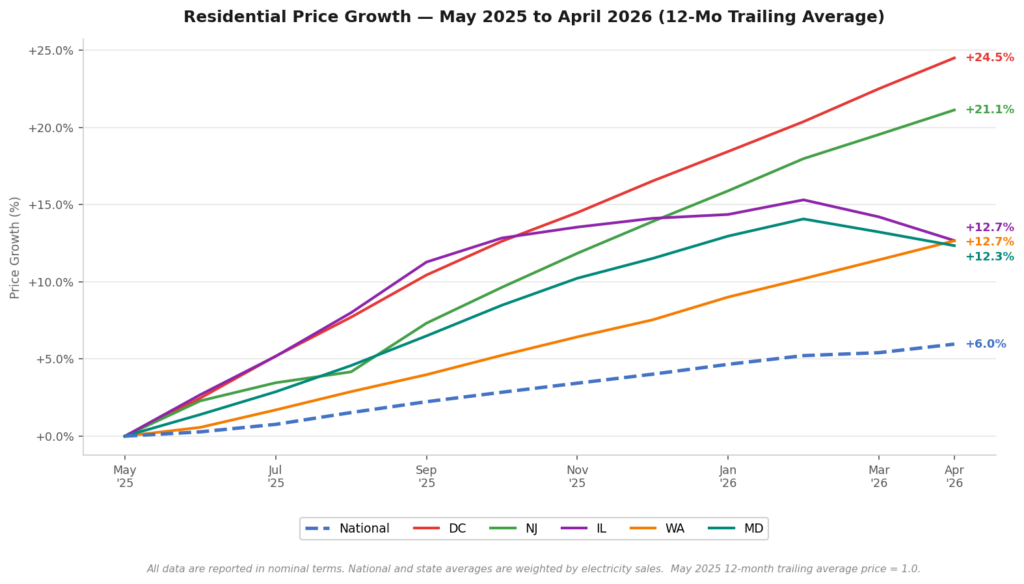
Like Pepco in DC, PSE&G (NJ), ACE (NJ), and Pepco MD all substantially increased charges related to standard generation service in 2025 as a result of increased PJM capacity market prices.
Texas’ average electricity rate in April 2026 rose relative to April 2025, as rates charged by the major retail electric providers across much of the state jumped at the end of 2025 and beginning of 2026. Nevada’s average electricity rates also rose in the last year. Nevada Power and Sierra Pacific Power, the two largest utilities in the state by sales (both do business as NV Energy), concluded rate cases; new rates went into effect in April 2026. Average rates in Nevada remain relatively low.
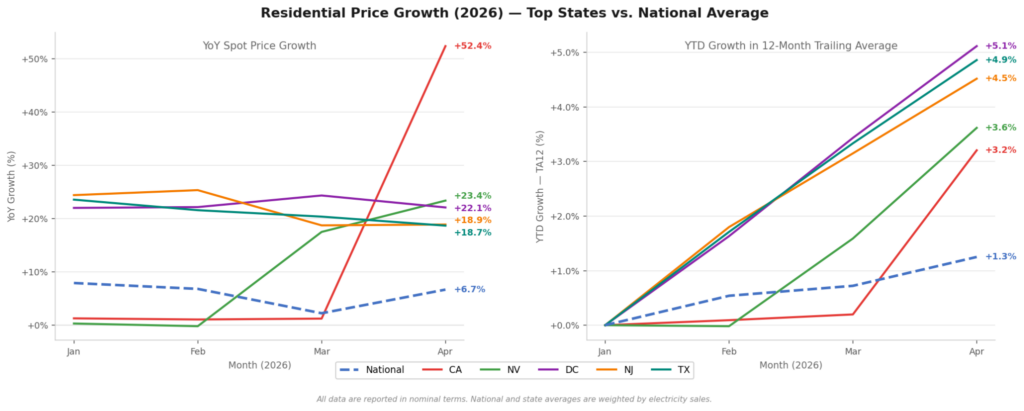
Note: The substantial jump in California rates in April 2026 relative to April 2025 is largely a function of the Utility Commission’s decision to delay an annual bill credit that is typically applied in the month of April but that this year will be applied in a higher electricity usage month.
Other April Developments
Rates charged by PECO Energy, the largest investor-owned utility in Pennsylvania, have increased by 56% over the last five years. At the end of March 2026, PECO filed a rate request with the state regulator that would have increased residential bills by an additional $20/month beginning in 2027. In response to customer and political backlash, the company announced on April 16 that it would withdraw its request. Pepco Maryland, whose rates have increased by 79% over five years and 21% in the last year alone, announced on April 14 that it would limit a pending rate request in response to certain provisions of the State Utility RELIEF Act.
Alabama Power customers are paying $460 more/year for power than they were five years ago, prompting increased attention around this year’s Public Service Commission elections. Republican allies of the Company in the State legislature previously introduced a bill that would eliminate PSC elections. Following widespread backlash, the bill was pulled in February. On April 3, Alabama Governor Ivey signed new legislation expanding the PSC, adding several seats to be appointed by the Governor. The enacted version of the law also eliminated a provision that would have required Alabama Power to regularly conduct a full rate review, something it has not done since 1982.
Eversource Energy (NSTAR Electric) rates in Massachusetts increased by 36% from March to April, among the largest single-month increases in the dataset. That change resulted from Governor Healey’s call for winter utility bill relief. Electric utilities agreed, and the Healey administration announced that they would cut rates by 25% in February and March 2026. Eversource Energy (NSTAR Electric), the second largest utility in the state, reduced residential rates by 24% in February. Rates then rebounded in April and are now 4% higher than they were in January.
Contact
For more information, feedback, or questions, please contact Lauren@cleanecon.org and Steven@cleanecon.org.