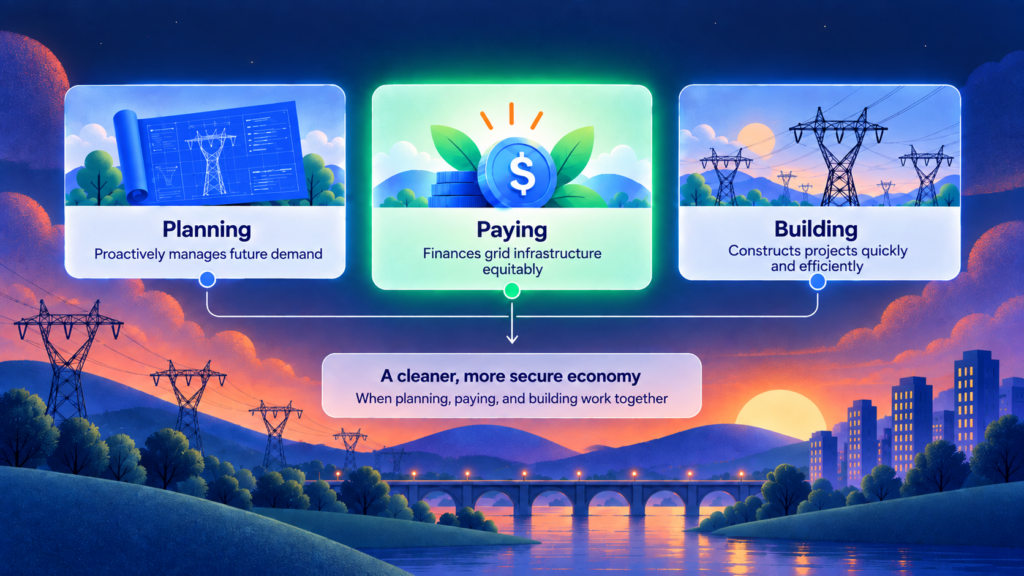
We are in the era of the electron. From AI infrastructure and EVs to advanced manufacturing and robotics, the industries defining America’s economic future all run on electricity. Meeting the fastest sustained surge in electricity demand in a generation will require doubling, or even tripling, the size of the American grid.
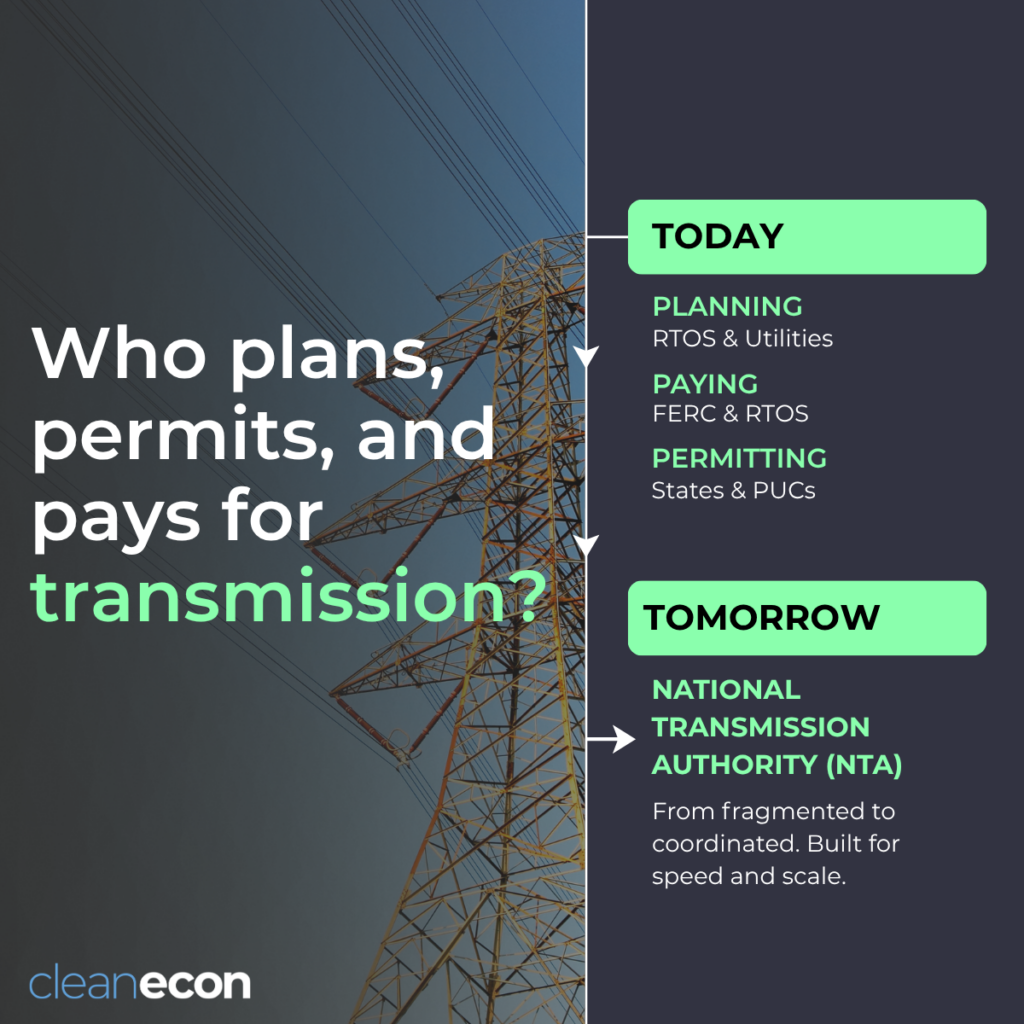
But our current system is not equipped to deliver tens of thousands of miles of new, high-voltage power lines. That’s because transmission planning, permitting, and cost allocation authorities are fragmented across numerous jurisdictions. Utilities are incentivized to build locally, rather than regionally, and siting lines that cross multiple states remains extraordinarily difficult.
Our balkanized electric sector is particularly bad at building interregional transmission, or high-voltage lines that cross large swaths of the country. These lines are essential for moving electricity from where it is produced – whether by gas, nuclear, geothermal, or solar — to where it is ultimately consumed. These factors have dramatically slowed the pace of deployment. In 2024, only 277 miles of new large-scale regional or interregional lines were completed. That’s down from 4,000 miles in 2013.
As we’ve written before, meeting growing electricity demand with clean, abundant, affordable resources and supporting the next generation of American industries demands a fundamentally different regulatory approach to building and financing energy, one that moves at the speed of the market.
One such approach is the creation of a National Transmission Authority (NTA): a single entity responsible for planning and enabling a high-voltage transmission overlay. This isn’t the only solution to effectively connect the grid, but it represents the level of ambition we think it will take to build the grid of the future.
A National Transmission Backbone
A National Transmission Authority (NTA) would be responsible for facilitating a comprehensive transmission backbone. A national, high-voltage system would alleviate grid congestion, increase system reliability, and open new areas of the country for development.
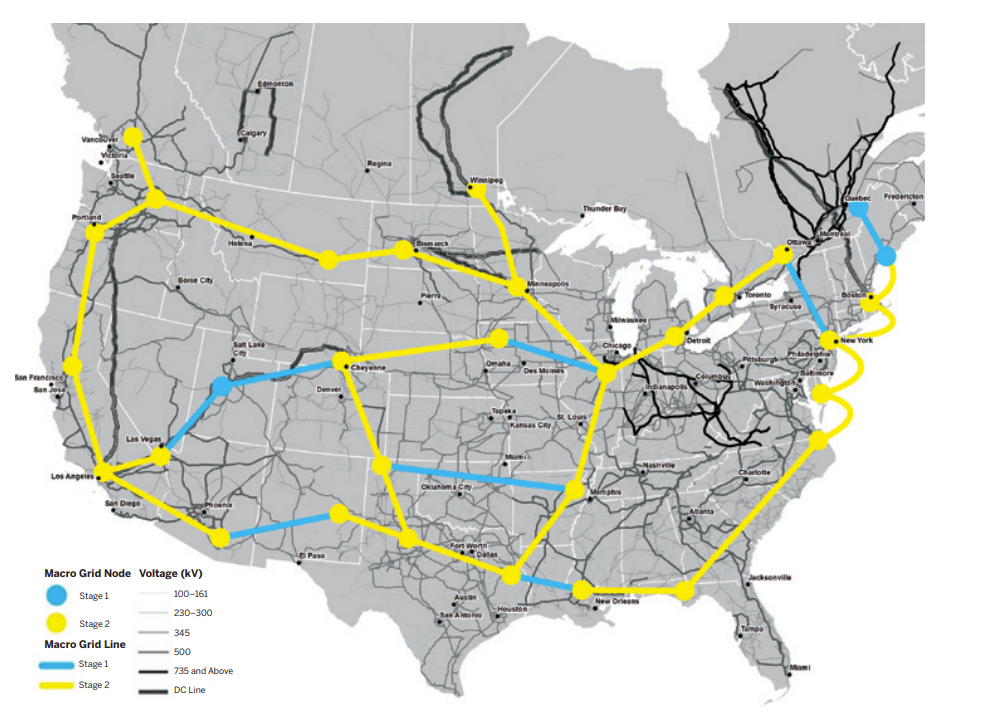
Importantly, this approach would consolidate transmission planning, permitting, and financing mechanisms at the federal level, with the NTA assuming many responsibilities currently held by states and regional grid operators.
Only by centralizing these authorities can we hope to meet required pace and scale.
An NTA can leverage the analytical capabilities of the Department of Energy and the national labs to design a system efficiently connecting generation resource zones with cities, defense installations, and key industrial hubs. The NTA could then competitively bid out construction and operation of planned facilities to either utilities or merchant developers.
Just as important as planning the system is the ability to approve its construction. Much like FERC has been granted authority to permit interstate natural gas pipelines, the NTA should be given siting authority for nationally significant lines and lead agency status for required environmental reviews.
The thorniest transmission problem is always cost allocation – or deciding who pays. The federal government can alleviate this issue by paying for the majority of these lines, much like it does with interstate highways. Using public money via low-cost loans or grants will also remove transmission costs from the rate base, helping to alleviate household burden.
A NTA could also implement and manage a Grid Infrastructure Fund, supplemented by voluntary contributions, or surcharges, on the largest electricity users (read: hyperscalers), used to buy down the cost of grid expansion for the public good.
We’ve built things before.
Seventy years ago, President Eisenhower signed into law the Federal-Aid Highway Act of 1956, which jumpstarted construction of an interstate highway system. Citing national defense, the government agreed to pay 90 percent of highway construction costs. Today we need federal support for a different kind of linear infrastructure.
Cheap and abundant electricity has driven American industry for over a century. But our grid is in need of dramatic reinvestment, and there are too many roadblocks for getting new power plants online. The resilience and expansion of our electric infrastructure is an immediate and pressing priority for the United States’ national and economic security.
But under an NTA, we can build and construct a transmission network that can compete on a global scale. We have an opportunity to reimagine the largest and most complex machine ever built – let’s not squander the moment.