Each month, the CleanData team will publish an update to the Electricity Price Hub (EPH), our partnership with Heatmap News and MIT. The platform tracks monthly residential electricity rates and bills at the utility level across the country. These updates share what the data shows: where prices are moving, which utilities are driving changes, and what is behind the numbers. This is our June 2026 update.
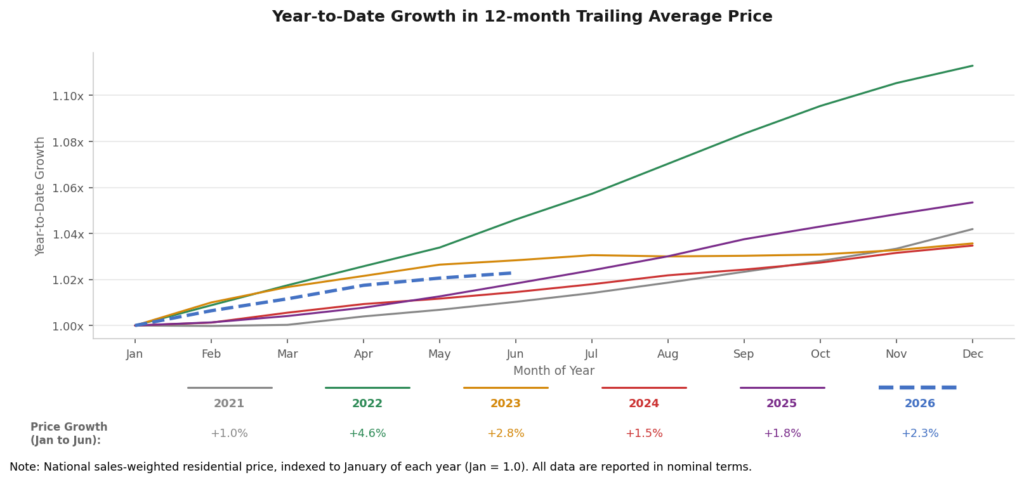
In the first half of the year, the national average electricity price, measured as a 12-month trailing average, is up 2.3%, while the average household bill is up 2.1% or more than $3/month. Price growth in 2026 to date has outpaced growth in the first half of 2021, 2024, and 2025.
State and utility level trends
In several states, average rates have risen faster than the national average in recent months.
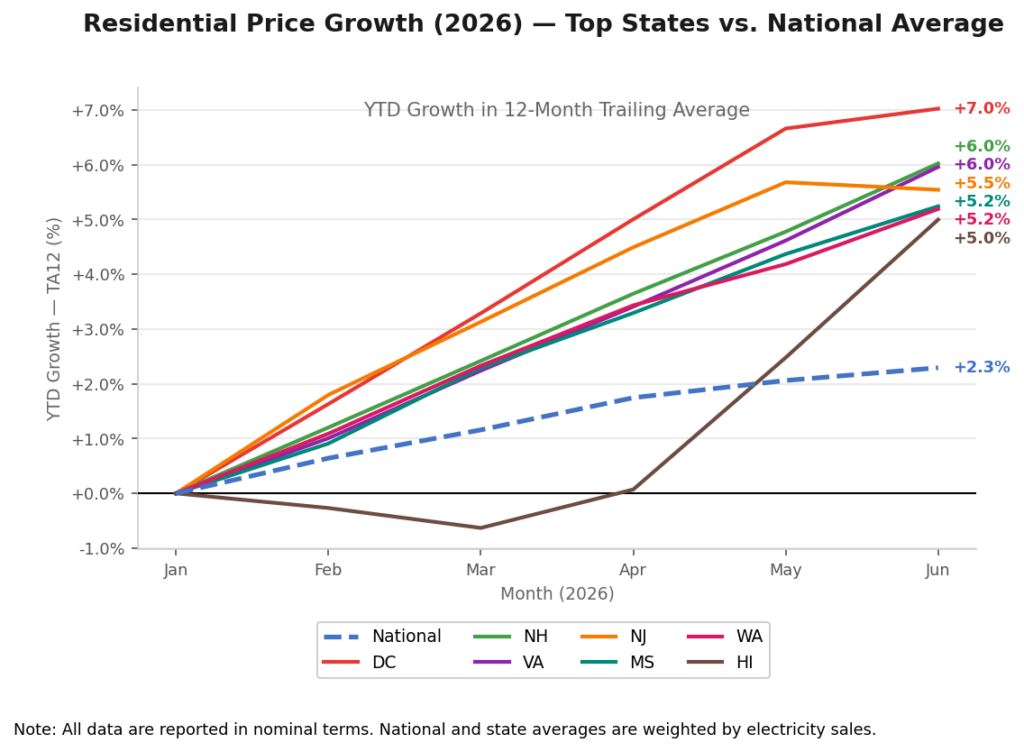
In June 2026, the average residential rate in New Hampshire was 16% higher than it was in June 2025, and the 12-month trailing average electricity price was up 6% since the beginning of the year. Rates are up at all four of the state’s largest utilities, ranging from +4.5 to +11.3% since January and adding from $10 to $22 to average monthly bills in the last six months.
By contrast, recent increases in Virginia are driven almost entirely by the state’s largest utility, Dominion Energy, whose rates are up 8% year-to-date and 17% in the last year. The Virginia State Corporation Commission approved a base rate increase that took effect in January 2026. As a result of that change, average residential base rates in June 2026 are up 7.5% year-over-year.
Continuing a trend that emerged in last month’s data, elevated fuel and purchased power costs are driving sharp increases in rates charged by Hawaii’s investor-owned utilities–up from 23% to 56% year-over-year and adding from $82 to $168 to monthly bills. New Jersey and Washington DC also continue to rank among the states with the highest growth in the first half of 2026.
Summer Electricity Rates and Bills
Across the country, household electricity bills often increase in the summer months as rising temperatures push average household electricity usage up. For some customers, electricity prices also automatically adjust in the summer months, which most utilities with seasonal charges define as beginning in June.
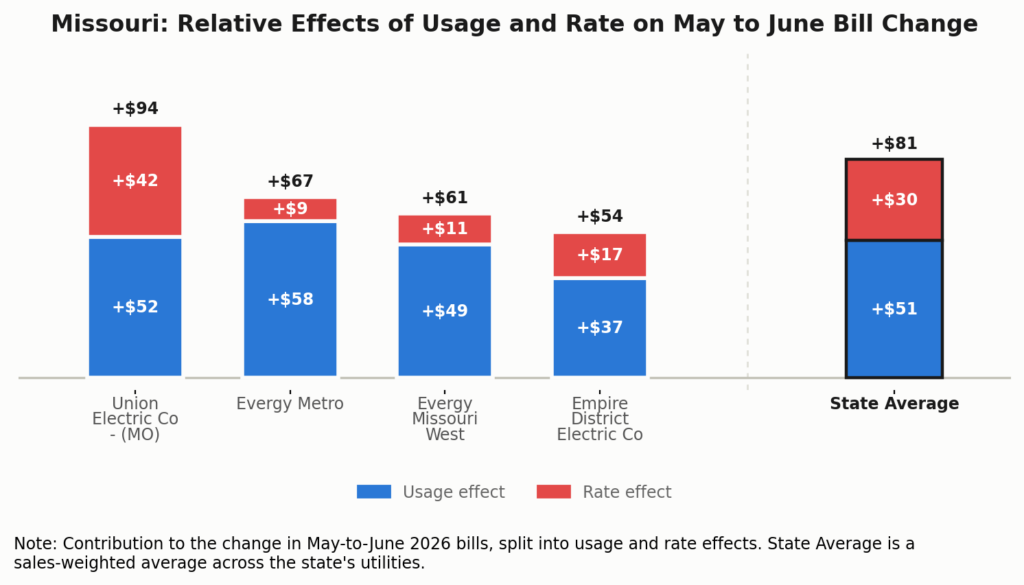
Most seasonal charges increase in summer months, compounding the bill impact of higher summer usage. For example, Missouri’s four IOUs all have seasonal base rate charges that increase from June through September. On average across the four, bills increased by $81 from May to June, with summer rates contributing $30 to that total. Summer rates had the biggest impact on Union Electric bills, which were up $94 in June, with 44% of the change attributable to rates.
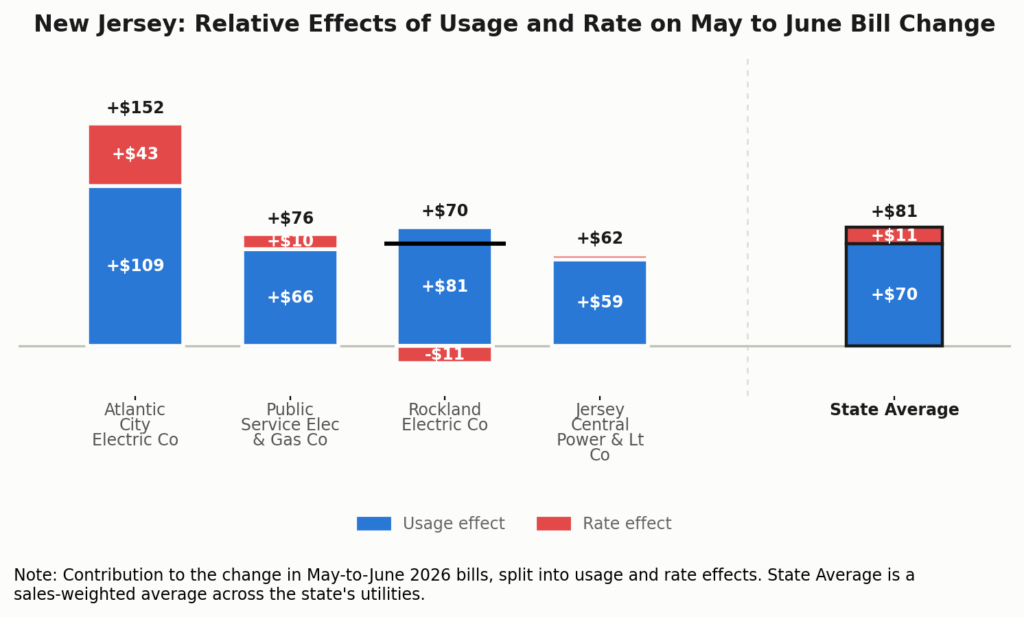
However, some tiered seasonal charges only step up for higher-usage tiers, while the charges that apply to the first tier of usage stay the same or even decrease. The net effect of these charges varies. New Jersey’s IOUs all have tiered seasonal charges that adjust in June, but the impact on summer bills varies widely due to differences in design. For Rockland Electric customers, for example, seasonal rates mitigate the bill impact of increased summer usage, subtracting $11 from average June bills, while for Atlantic City Electric, the shift to summer rates adds $43 to June bills.
Other June Developments
Across the New Jersey IOUs, new generation changes under their default supply service take effect annually on June 1. Last summer, a spike in those charges, driven by the spike in PJM capacity prices, caused a dramatic increase in New Jersey household bills. While still elevated, June 2026 generation charges were generally flat relative to June 2025 rates.
| June 2024 – June 2025 Change | June 2025 – June 2026 Change | |
| PSEG | +44.2% | -4.1% |
| JCPL | +34.6% | +2.1% |
| ACE | +45.0% | -1.3% |
| REC | +28.8% | +2.9% |
On June 19, Duke Energy Carolinas filed a rebuttal in its North Carolina rate case voluntarily cutting its base case revenue increase by more than half and its total requested revenue by nearly 40%. According to Duke’s own witness, “the Company has never made a reduction of this magnitude on its own initiative.” We estimate that the original rate request would add $20/month to average household bills over the two-year rate plan, while the updated case would raise average household bills by closer to $10/month by 2028.
Contact
For more information, feedback, or questions, please contact Lauren@cleanecon.org and Steven@cleanecon.org.